Our Return to Nature Navigators (and Why Email Lists Matter)
We talk about our second go-round at another Nature Navigators program, hosted by Keeping Norfolk Beautiful in March 2026., and how a much-appreciated email sparked the trip!
HomeschoolED Heroes Staff
4/18/20263 min read
One thing homeschool parents need to learn very quickly is this:
If you hear about a good program, get on the email list immediately.
Seriously.
Life gets busy. Months pass. Events come and go. And sometimes the only reason you remember a great opportunity exists is because an email pops into your inbox reminding you about it.
That’s exactly what happened with our second visit to Nature Navigators in March 2026.
How We Heard About It... An Email From Nature Navigators
It had been several months since our family attended our first session with Keep Norfolk Beautiful, and honestly, life had gotten hectic enough that the program had slipped from the forefront of our minds. Then one day, we received an email update announcing their upcoming March session—and immediately, we signed up.
That email mattered.
And it reminded us of something important that applies not only to homeschool organizations, nonprofits, and community groups… but businesses too:
Use your email lists.
You worked hard to build your audience. Communicate with them. Keep them informed. Tell them about your upcoming events, programs, opportunities, and updates. Otherwise, how will the people interested in what you offer know what’s happening? And beyond that—how can they help spread the word to others?
For parents on the receiving end, this is also your reminder to actually sign up for newsletters and mailing lists when you discover organizations you enjoy. You never know when an email might lead your family to your next great experience.
For anyone interested, you can learn more about the program and sign up through the Nature Navigators page here.
Where Nature Navigators Takes Place
This particular session took place at Lafayette Park in Norfolk, located at 3500 Granby Street. And honestly? It’s surprisingly easy to find once you know where you’re going.
When you pull into the parking lot, it looks like you’re heading toward the regular park playground area. But instead of stopping at the slides and swings, you simply walk past them down the sidewalk toward the brown ranger station building sitting at the other end of the lot. You’ll know you’re in the right place because there’s a large “Keep Norfolk Beautiful” sign right out front.
What the Kids Learned During Nature Navigators
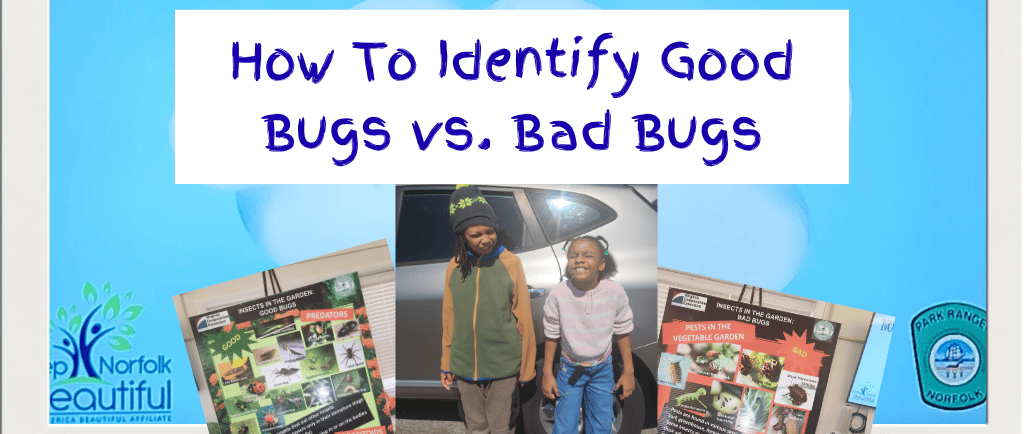
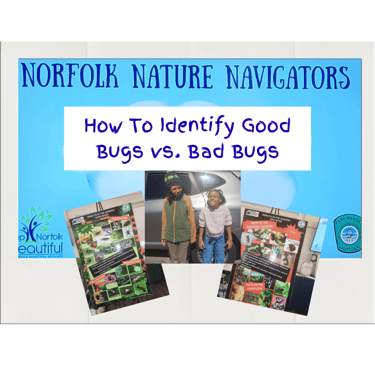
This month’s theme focused on one of the kids’ favorite topics yet: garden bugs.
More specifically, they learned how to identify “good bugs” versus “bad bugs” in a garden environment.
Now this was a topic that immediately got the children excited.
The session taught the kids about different types of insects, which bugs help pollinate gardens, and which bugs can actually damage plants by eating leaves, stems, or vegetables. It was a really practical lesson because gardening can sometimes feel intimidating to beginners—especially kids—but breaking it down into simple concepts made it approachable and fun.
The children also learned that not every creepy-crawly insect is automatically a problem. Some bugs are incredibly important for healthy gardens and ecosystems. Pollinators help flowers bloom, fruits grow, and plants reproduce. Meanwhile, other insects can become harmful if left unchecked.
And of course, because Nature Navigators always includes hands-on learning, the kids didn’t stay indoors the whole time.
They went outside into the garden areas and practiced identifying different kinds of plants while observing the environment around them. Being able to physically walk through the space instead of just hearing about it made the lesson feel real and memorable.
By the end of the day, the kids were absolutely buzzing with excitement.
In fact, they’ve continued asking us when they can attend the next Nature Navigators session—which honestly says everything right there.
Even better? The experience made them more interested in gardening at home. Suddenly they were paying closer attention to flowers, insects, and plants in ways they hadn’t before. And that’s one of the beautiful things about programs like this: they spark curiosity that continues long after the event itself is over.
That’s the kind of learning experience that sticks.